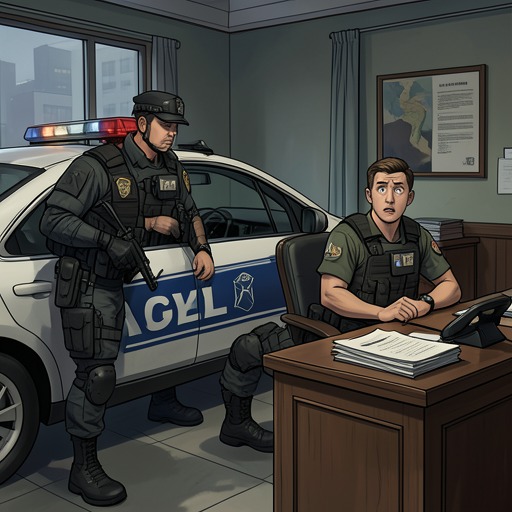
Nikki Miller
The Minds of Billy MilliganNikki Miller is a detective assigned to the Sexual Assault Squad whose work on Polly Newton’s case turns uncertainty into a warrant-backed investigation of Billy Milligan. Returning from vacation as the case develops, she helps gather identification evidence, insists on acting when fingerprints connect Milligan to Newton’s car, and oversees a search of his apartment that yields items associated with the victims and the suspect’s aliases.
Identity and Assignment
On Wednesday, October 26, Nikki Miller checked in for the second shift at the Central Police Station in downtown Columbus at three o’clock. She had just returned from a two-week vacation in Las Vegas. Detective Gramlich told her that he was transporting a young rape victim to University Hospital and that the case would be hers. Because she had been away, she had not read reports about the campus rapist or seen the composite drawings; other detectives briefed her on the case.
The victim was Polly Newton, a twenty-one-year-old student at Ohio State University. Earlier that morning, Newton had been abducted near her apartment, taken to an isolated area, and then made to cash checks after the assault. Miller entered the investigation after these events, responsible for pursuing leads while working with a victim who had already spent hours with police.
Identification and Fingerprint Evidence
Miller brought Newton to the Detective Bureau to work with an artist on a composite drawing, then asked her to examine photographs of white male sex offenders. Newton searched three trays of mug shots, each containing a hundred photographs, without success. After seven hours, she was exhausted and stopped for the night.
The next morning, detectives took Newton to Delaware County, where she was able to lead them to the scene. They found 9-millimeter casings near the pond. When Newton returned to headquarters, Miller had just come on duty and seated her in a small room across from the reception desk with another tray of photographs. Newton initially passed over Milligan’s picture, then turned back to it. She thought the young man pictured with muttonchop whiskers looked like her assailant, but could not say for certain. Her response was therefore tentative, not a positive identification.
That uncertainty mattered to Miller. She was annoyed by the delay in pursuing Milligan, but Newton’s inability to identify him conclusively left Miller waiting while detectives checked fingerprints lifted from the Corvette. The comparison identified Milligan’s right index finger, right ring finger, and right palm on the passenger-door glass. The prints were rated fair value and produced a ten-point match. Although Eliot Boxerbaum and John Kleberg still wanted an expert to evaluate the result, Miller decided the match justified proceeding.
Warrants and Apartment Search
Miller filed for warrants charging kidnapping, robbery, and rape, intending to bring Milligan in so Newton could view him in a lineup. Once the warrant forms were complete, she contacted a judge, who signed them at 1:20 in the morning after hearing the evidence and considering the urgency. Miller returned to the Channingway apartment complex through worsening fog.
At 2:15, Miller called the mobile Crime Scene Search Unit. When its personnel arrived, she presented the warrants and took part in the search of the apartment. The inventory included $343 in cash, sunglasses, handcuffs and a key, a wallet, and identification for William Simms and William Milligan. In a closet, investigators found Master Charge cards bearing the names of Donna West and Carrie Dryer, a clinic card for West, a photograph of Newton, and a .25-caliber automatic pistol with five live rounds. The search thus added physical objects and documents to the fingerprint evidence that had prompted the warrants.
Role in the Investigation
Miller’s contribution is defined by the distinction between a victim’s uncertain recognition and evidence that could be independently checked. She does not treat Newton’s hesitation as certainty: she waits because there is no positive identification, then acts when the fingerprint comparison supplies a separate basis for seeking arrest warrants. The subsequent apartment search broadens the investigation beyond the car prints, uncovering property connected to multiple victims and identification under more than one name.
The episode gives Miller a procedural rather than personal arc. Her return from vacation places her abruptly at the center of an unfinished investigation; her persistence moves it from mug-shot review and forensic delay to a warrant-backed search. The sequence also preserves an important difference between the evidence types: Newton’s photograph response remained qualified, while the fingerprint match and the search inventory provided distinct investigative leads.